
‘Nduja, is a spicy spreadable sausage from the Calabrian region of Italy. Read on to learn all about ‘nduja, how to use it, why it deserves a space in your fridge as well as some of the best ‘Nduja recipes.

If you like your food spicy, savoury and packed with flavour then ‘nduja is an ingredient that you are going to love!
This soft, spreadable pork sausage paste from Calabria has, for good reason, become increasingly popular in the UK. It is intensely savoury, properly hot and incredibly versatile.
A little ‘nduja can transform the most humdrum bowl of pasta, pizza, scrambled eggs or pan of beans into something really rather special. It “melts” as you cook it releasing that delicious rich pork fat and punchy chilli into whatever you are making.
And even better you really don’t need much for it to make an impact.
In this guide I’ll explain what ‘nduja is, what it tastes like, how to pronounce it, if you need to cook it, how to store it and importantly lots of delicious ways to use it.
What is ’nduja?
‘Nduja is a soft, spreadable, spicy pork sausage from Calabria in southern Italy.
It comes from the area around Spilinga, a small town in the province of Vibo Valentia. Calabria is located in the toe of the Italian boot, and has a strong tradition of preserving food and curing eats.
‘Traditionally ‘nduja was the result of the classic waste not, want not mindset of those needing to make thrifty foods., making use of the parts of the pig which were less desirable or harder to sell, together with park fat, salt and lots of chilli. Modern ‘nduja will often not contain any offal, and is made with pork eat and faat.
‘Nduja is defined by the chilli, giving the sausage its characteristic brick red coloul, heat ad distinctive flavour.
Unlike a regular sausage, ‘nduja is too soft to cut into rounds of slices. Rather it is soft enough to spread, spoon o squeeze out of its casing.
It is this softness that makes it so useful in cooking.
When heated the fat in the ‘nduja melts, and the sausage breaks down into a sauce, along with the chilli and savoury flavour.
How do you pronounce ‘nduja?
The spelling looks rather more complicated than how is is pronounced.
Generally go for something along the lines of en-DOO-ya, although there will be variations.
The name comes from the Calabrian dialect and is likely related to the French andouille. There are regional variations in both spelling and pronunciation.
So don’t worry about getting it absolutely perfect – if you are ordering in a trattoria or restaurant, en-doo-ya will get you served the right thing.

What does ’nduja taste like?
The quick answer is hot, savoury, porky with a deep intense flavour.
The pork and fat contribute a deep rich flavour, balanced by the fiery heat of the chilli. The fermentation and curing process add layers of complexity.
It really can be quite hot, but good ‘nduja isn’t just hot for the sake of being hot. The fat tempers the chilli heat and flavour adding a rich, almost luxurious note.
I like to think of ‘nduja as both a sausage and a condiment.
You can use it as an ingredient in a dish, but in in the same way you would use chilli paste, harissa or other strongly flavoured condiment,
Just remember that a little goes a long way.
How hot is ‘nduja?
It is hot!
Exactly how hot will depend on the producer and their recipe, but authentic ‘nduja is made with a generous quantity of chilli and it will have a noticeable kick.
If you are using ‘nudja for the first time err on the side of caution and use less. You can always add more.
It is really important to use less when using it in a sauce. Once you have stirred it in there really isn’t much you can do if you have added too much.
The god news is that the richness of the pork will balance the chilli, so ‘nduja is so much more than a blast of heat!
Do You Have to Cook ’Nduja?
No! Because ‘nduja is a cured and fermented product it can be eaten without cooking.
Spread it onto toast or crackers, use on crostini or add to a cold dish.
But I think that cooking is where ‘nduja really comes into its own.
As it heats the fat in the nduja melts and the sausage breaks down
You don’t have to cook it. Smooth and soft, you can spread this sausage on toast or crackers straight from the packet. However, it comes into its own on pizza or pasta dishes.
’Nduja will more or less melt into a sauce, so that it can be hard to identify where that wonderful savouriness is coming from.
What is ’Nduja Paste?
‘Nduja is produced as a sausage that contains the soft paste. Many producers will also be producing their ‘nduja in a pasta form – maybe with some other ingredients.
We just stick to the sausage.
Is ’Nduja Similar to Chorizo?
Yes and no!
‘Nduja and Spanish chorizo sausage are both spicy preserved pork products. With a similar colour, both are traditionally fermented.
Generally ‘nduja is softer (although some chorizos are soft and spreadable. However, while chorizo can be spreadable it is usually firmer than ‘nduja.
‘Nduja has a fiery hotness, whilst chorizo; although hot, has a drier flavour from the traditional paprika.

How Long Does ’Nduja Last in the Fridge? Does it Go Bad?
’Nduja is preserved meat, fermented and packed with chilli and salt. This means it was designed to ensure the meat keeps well, even without refrigeration.
It is probably safer to keep it in the fridge once the packet is open, but you should be able to keep it for a month (check what it says on the packet). If you are getting through it too slowly, you can freeze it.
Be it fridge or freezer make sure that it is tightly wrapped to prevent the air getting to it the best you can.
After a few weeks in the fridge the cut surface of your ‘ndjua might have darkened a little – due to the fat oxidising. If you can taste a difference then cut it off, if not go right ahead and use it.
How Can I Use ’Nduja?
We love ‘nudja on pizza, which is how we and countless others first discovered it, but it is so much more than that. A little goes a long way, think of it as a condiment as well as an ingredient.
Use ’nduja in classic robust southern Italian dishes. It is good with pasta, gnocchi, on pizzas or in risotto.
In Calabria, it is a popular addition to frittatas or in fritters of zucchini flowers or aubergine slices.
Nduja Recipes
'Nduja Breakfast / Brunch Ideas
Just like bacon ‘nduja pairs brilliantly with eggs. We love to:-
– Melt some in the pan when frying eggs
– Stir into scrambled eggs
– Mix into the tomato sauce when making shakshuka
– Mix into a tortilla or frittata
'Nduja Dips, Dressings & Sauces
The “meltiness” and softness of ‘nudja makes it perfect for jazzing up everyday dips, dressings and condiments. Why not try?
– Melting into butter to make a soft spreadable ‘nduja butter
– Stirring through mayonnaise
– Mixing into your favourite dips – ‘nduja hummus sounds SO good!
'Nduja Appetisers & Starters
Because of its intense flavour ‘Nduja is fantastic for adding a punchy hit of heat and flavour to appetisers and starters.

‘Nduja Canape Blinis
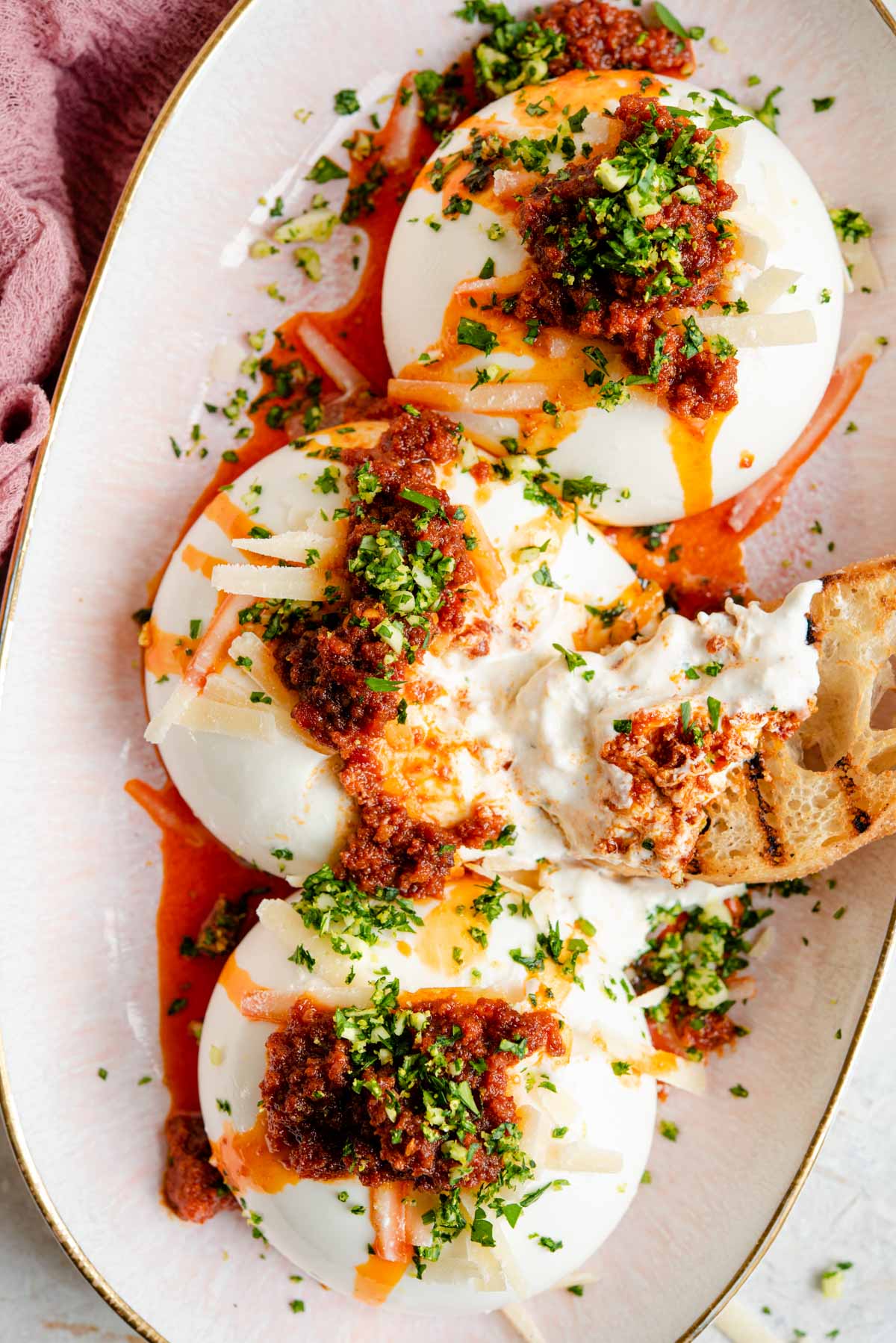
Burrata with Crispy ’Nduja & Gremolata
'Nduja Pasta Recipes
A little 'nduja goes a long way so it is a fantastic way to add a shot of heat and flavour to pasta dishes

15 minute ‘nduja pasta

Spicy Pumpkin & ’Nduja Pasta Sauce

Orecchiette with Nduja and Eggplant (Aubergine)

Senatore Cappelli organic whole wheat pasta with Nduja and mushrooms
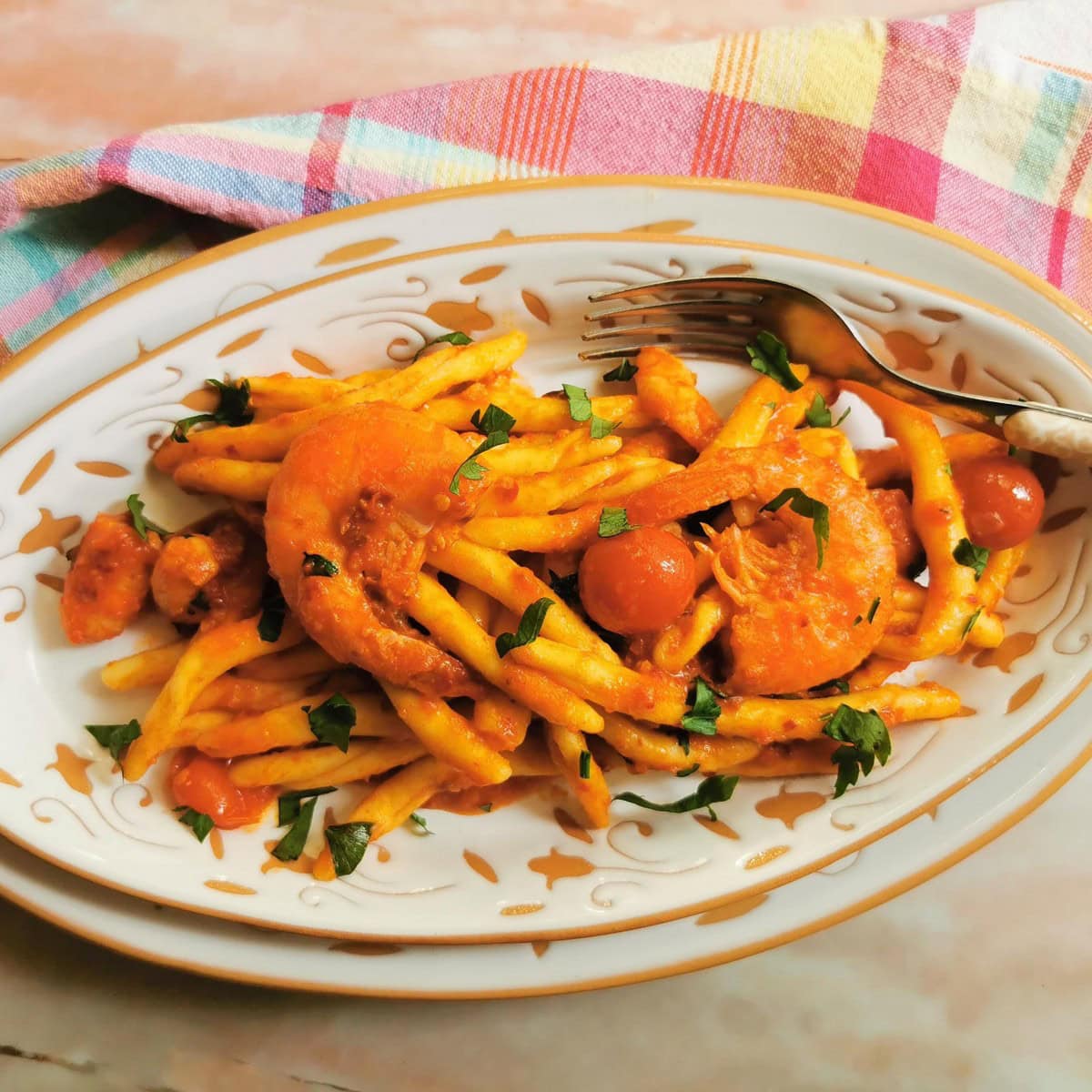
Pasta with Nduja sauce and shrimp (prawns)
Mains with 'Nduja (Not Pasta)
'Nduja is not just for pasta. Why not …
– Spread some ‘nduja under the skin when next roasting a chicken.

Creamy Sausage and ’Nduja Butter Beans

‘Nduja sausage hash & chorizo cracking
Have you tried ‘nudja yet? Let me know in the comments.
More Italian Products
A closer in depth look at some Italian classics, how they are made and recipes using them.



Sadie Porter
Love reading about new things and this really is new to me. Fascinating to know where these foods originate from and the name is brilliant.
Melanie
I have had this before, served on small toasts with different antipasto’s. So good, so tasty and very fiery! I had no idea where it came from though. Really interesting.
Bryan B
My local pizza haunt does a wicked pizza with this on. Very tasty and certainly gives a kick.
Debs
I have sat and tried to pronounce ‘nduja’. Even the dog is looking at me with that certain look of ‘what are you doing’. Love reading about food origins, all very interesting.
fiona mullens
Nduja is so good. Full of flavour and deliciousness. It is great when added to a rich pasta sauce.
Paul W
I do like food with intense flavors, and this sounds fabulous. I had no idea of where it actually came from. Good reading.
Joe
The name suggest to me that this originated in North Africa rather than Italy and its location also indicates this possibility as it is the closest point in Italy to North Africa. Also the spicy nature of the product is a clue to its North African origin.